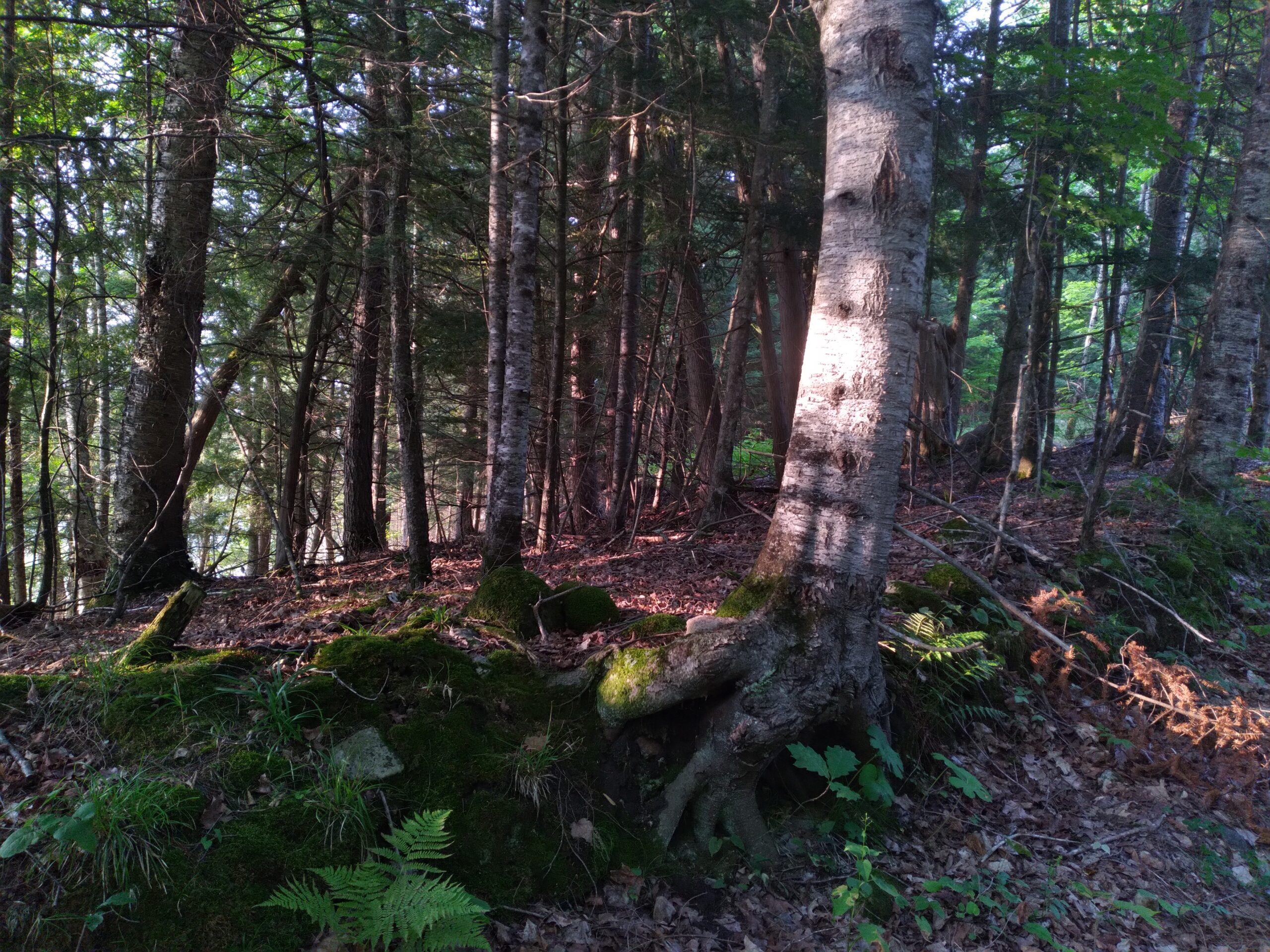
Before biking to a Pow Wow, looking at the route google maps suggested, I recognized the twisty look of what is called an unimproved road around here for the last leg of the route. Loaded down with tent and panniers, on the day I opted not to add a few kilometres to go via a county road instead. So yes, lane-wide potholes, bare bedrock, steep ridges, almost-scree on fast descents — the almost off-road experience that comes with biking a road made originally for horse logging, and not rebuilt, just scraped down to bedrock on the high spots for fill for the lowest.
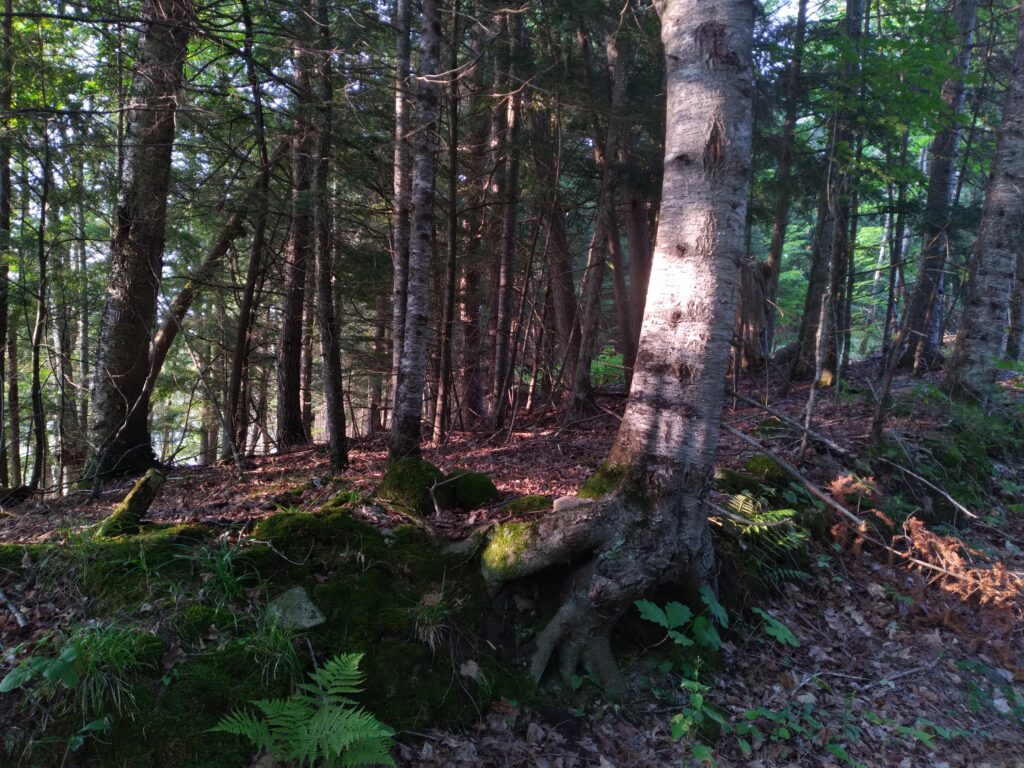
Leaving the flat land between river valleys for the rumpled land resting on much harder rock, those ridges marked the edge of another watershed.
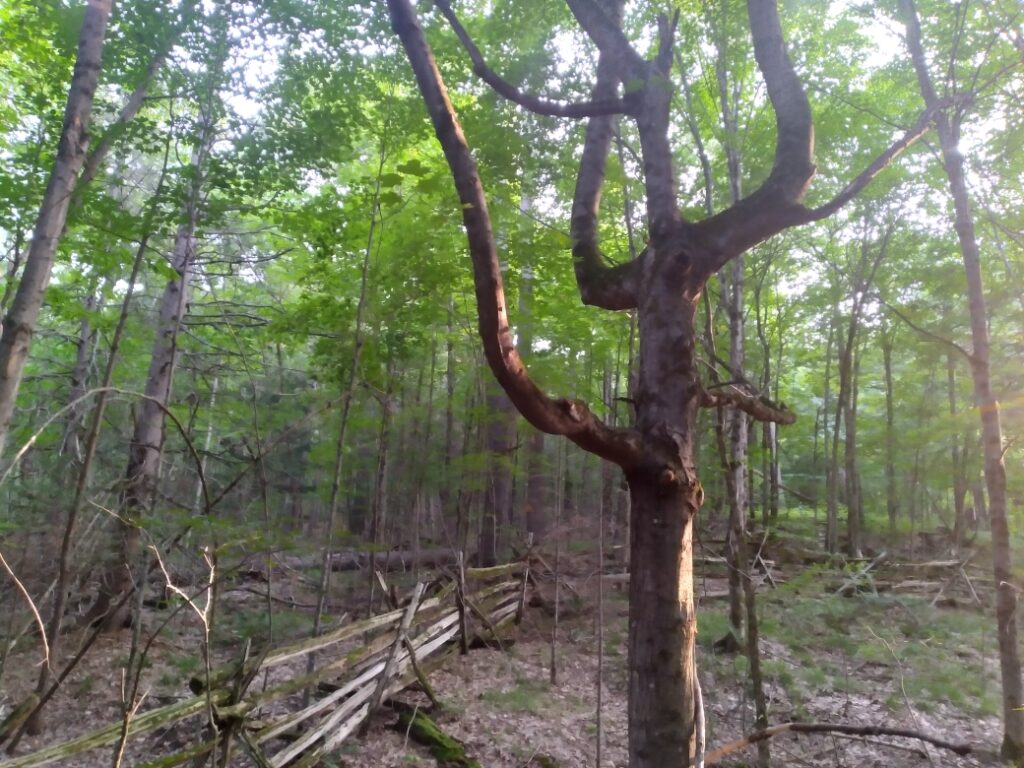
For decades the road would have been a tractor path leading to pastures on the clearcut slopes — and now it’s a logging road again, modern equipment and a truckload of logs waiting alongside, a bit further along.
But I stopped a few times to just be with who is rooted there now for their own purposes for the same reason I chose that road before returning to a human-centred world: to greet this watershed I was entering.
There’s much more to connecting with a new place. Much more.
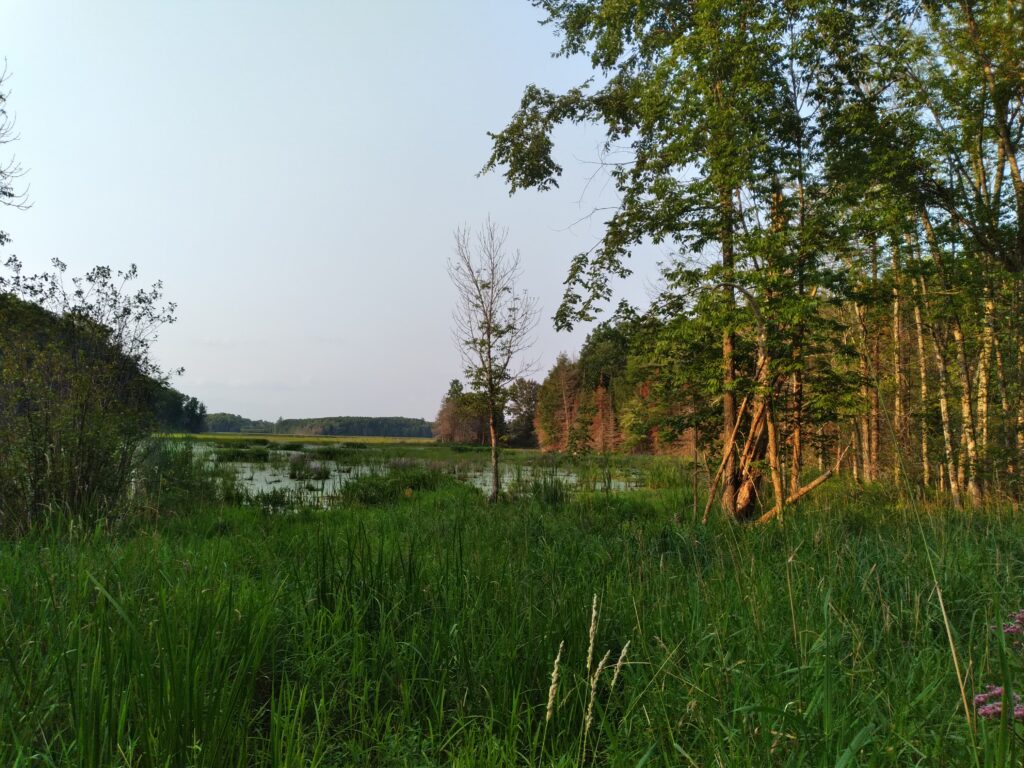
Rumbling down from a ridge, my rear-view mirror fell off. Noticed it taking a water break before climbing the next, and there was nothing to do but walk back to get it, to slow down and see more of where I was.
And to this, we in a modern context are so unused to letting this information run deep into us. With every distraction and modern convenience, we deaden these for the sake of convenience and comfort. I argue it’s like a muscle and when we don’t exercise it, it causes discomfort and even a pain response (fear) to feel it again.
https://giiwedinanaang.wordpress.com/2023/02/04/the-act-of-acknowledging/
Leave a Reply